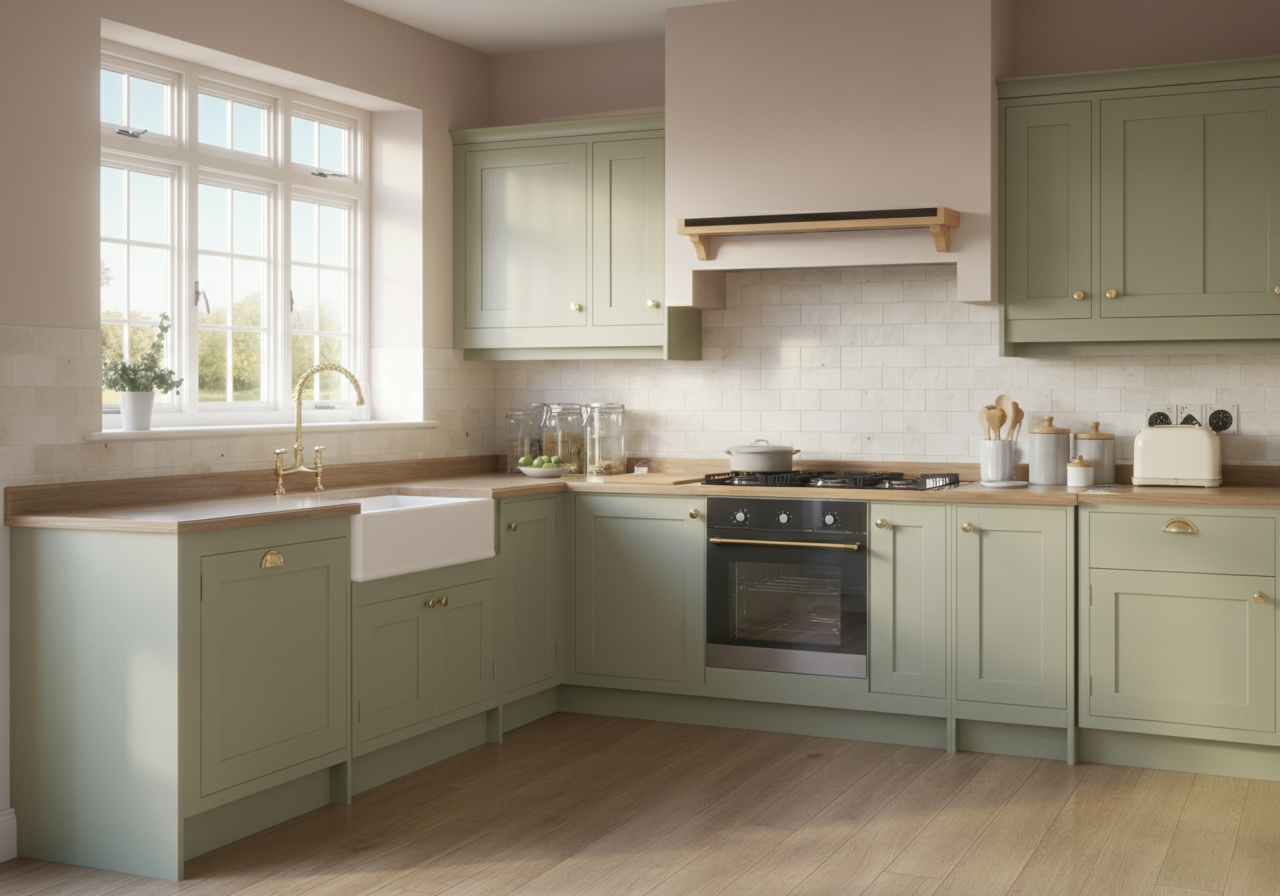

There’s a version of renovation no one talks about.
It doesn’t start with a mood board or a dream kitchen.
It starts with a leak.
A failed faucet hose.
Water where it shouldn’t be.
Cabinets pulled apart. Flooring damaged. Everything exposed.
And then comes the part most homeowners don’t expect:
Insurance will fix the damage…
but it won’t improve what was already there.
So the “new” kitchen?
Ends up looking exactly like the old one.
As a designer, this is one of the most frustrating (and most common) scenarios I see—and it’s exactly where strategy matters more than aesthetics.
What Insurance Actually Covers (and What It Doesn’t)
Let’s be clear:
Insurance is not a design partner. It’s a restoration tool.
It will:
- Replace damaged cabinetry (with like-for-like)
- Repair or patch flooring
- Restore plumbing and functional elements
It will not:
- Upgrade finishes
- Improve layout
- Modernize your kitchen
- Fix what was already outdated
Translation:
You get a repaired kitchen, not a redesigned one.
Why This Moment Still Matters (Even Without a Full Remodel)
Most homeowners think:
“Well, if I can’t redo everything, I’ll just let them fix it.”
That’s where opportunity gets missed.
Because even within constraints, this is a decision point:
- Do you accept a reset… or create a shift?
- Do you rebuild the same kitchen… or refine what’s possible?
This is what I call Design Triage.
Design Triage: What I Would Evaluate First
When a full remodel isn’t on the table, I focus on impact vs. effort.
Here’s where I’d look first:
1. What’s Being Touched Anyway?
If cabinets are being removed or repaired, this is the moment to ask:
- Can hardware be upgraded?
- Can finishes be changed instead of matched?
Even small shifts here change the entire feel.
2. What Visually Dates the Kitchen the Most?
Not everything contributes equally to a dated look.
Often, it’s:
- Countertops
- Backsplash
- Lighting
- Cabinet color tone
If you can adjust even one of these, you interrupt the “before” feeling.
3. Where Can a Designer Add Leverage?
This is where most people get it wrong.
They spend money evenly across the space instead of strategically.
A designer looks for:
- High-visibility zones
- First-impression sightlines
- Contrast opportunities
Not everything needs to change—just the right things.
The Hard Truth (and the Advantage)
Will this kitchen look brand new when it’s done?
No.
But that doesn’t mean it has to look the same.
The difference between “repaired” and “refined” comes down to decisions, not demolition.
And that’s where design earns its value.
If You’re in This Situation…
If you’re navigating a repair-not-remodel scenario, here’s what I’d tell you:
Don’t default to replacement mode because,
This is still a design opportunity—you just need a different strategy.
And if you’re not sure where to focus?
That’s exactly what I help clients figure out.
👉 Schedule a House-Call Design Consultation (we can work remotely)
We’ll walk through your space, your constraints, and exactly where to invest so your home doesn’t just get fixed—it gets better.




Comments +